

Validation of the Process Stability of the Manufacturing Route for Lightweight Metal Structural Components Based on Closed-Loop Titanium Alloy Material Cycles

TiReGo Project
New Melting Technology for Sustainable Ti6Al4V Mini-Ingots
Goals
As part of the HWH subproject, the metallurgical process route for the production of Ti6Al4 is to be fundamentally investigated, including the necessary processes of raw material compaction, melting, and casting using a new, combined plasma-arc cold-wall induction melting technology (Plasma-Arc-Melting / Cold-Wall-Induction). This also includes adapting the chemical composition of the alloy—using grain-refining additives—to meet the requirements of the aerospace industry.
The new process is intended to enable the direct use of cast material as forging stock. The starting point for the innovation proposed here is a single-stage melting and casting process for the production of small-scale Ti6Al4V ingots (diameter ≤ 200 mm), which, due to their fine cast microstructure, are suitable for direct use as forging stock. By incorporating a closed-loop Ti6Al4V recycling process, the material and resource efficiency of the manufacturing process can be significantly increased. The focus here is, on the one hand, on the development of a process route for the use of primary and recycled materials, the design of the plant concept, the optimization of the mold design, the addition of grain refiners, and the adjustability of the material microstructure.
Brief Description
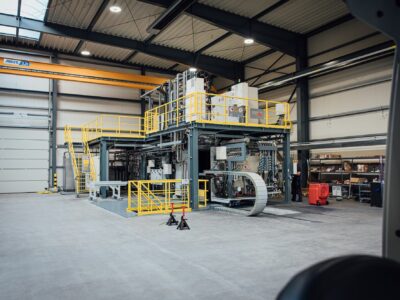
Within the project, HWH is responsible for producing the mini-ingots using a single-stage melting process and for selecting, defining, and remelting the available recycled material for direct recycling. This includes defining the entire process route for using primary and recycled materials to produce aerospace-certified semi-finished products in collaboration with the project partners. To this end, concepts for melting and establishing the recycling route for series production are being developed together with the project partners. Once the process route has been defined, the individual plant concepts will be designed, in particular the construction of a new cold-wall induction mold with a diameter of approximately 200 mm for the production of mini-ingots. In addition, the system for feeding lumpy recycled material into the melting furnace will be designed. In the HAP1 concept phase, the first mini-ingots will be produced using an existing mold design with a diameter of 120 mm. This includes selecting the raw materials and adjusting the casting parameters to produce the most homogeneous and fine microstructure possible in the ingot. The standard cast microstructure in existing process routes is very coarse for the Ti6Al4V alloy. By using the new SinglePAM furnace technology with an inductive continuous casting mold and combining it with the addition of a grain refiner during HWH, the microstructure can be significantly influenced to achieve the necessary homogeneity and grain size. In the HAP2 implementation phase, the findings from HAP1 will be applied to the industrially relevant ingot size (ᴓ 200 mm). In AP2.1, ingots will initially be produced from primary material. In addition, AP2.5 involves the implementation of a feeding system for lumpy recycled material. The recycled material originates from the forging processes at Otto Fuchs and is cleaned and processed by HWH to prepare it for reintroduction into the process. In AP2.6, ingots will then be produced from recycled material. In HAP4, the new production route will be evaluated in terms of its energy/CO₂ balance and manufacturing costs. This evaluation will also incorporate a plant design concept developed specifically for these applications.